HVAC Funding in NYC: How to Get $50K for the Summer Rush in 48 Hours
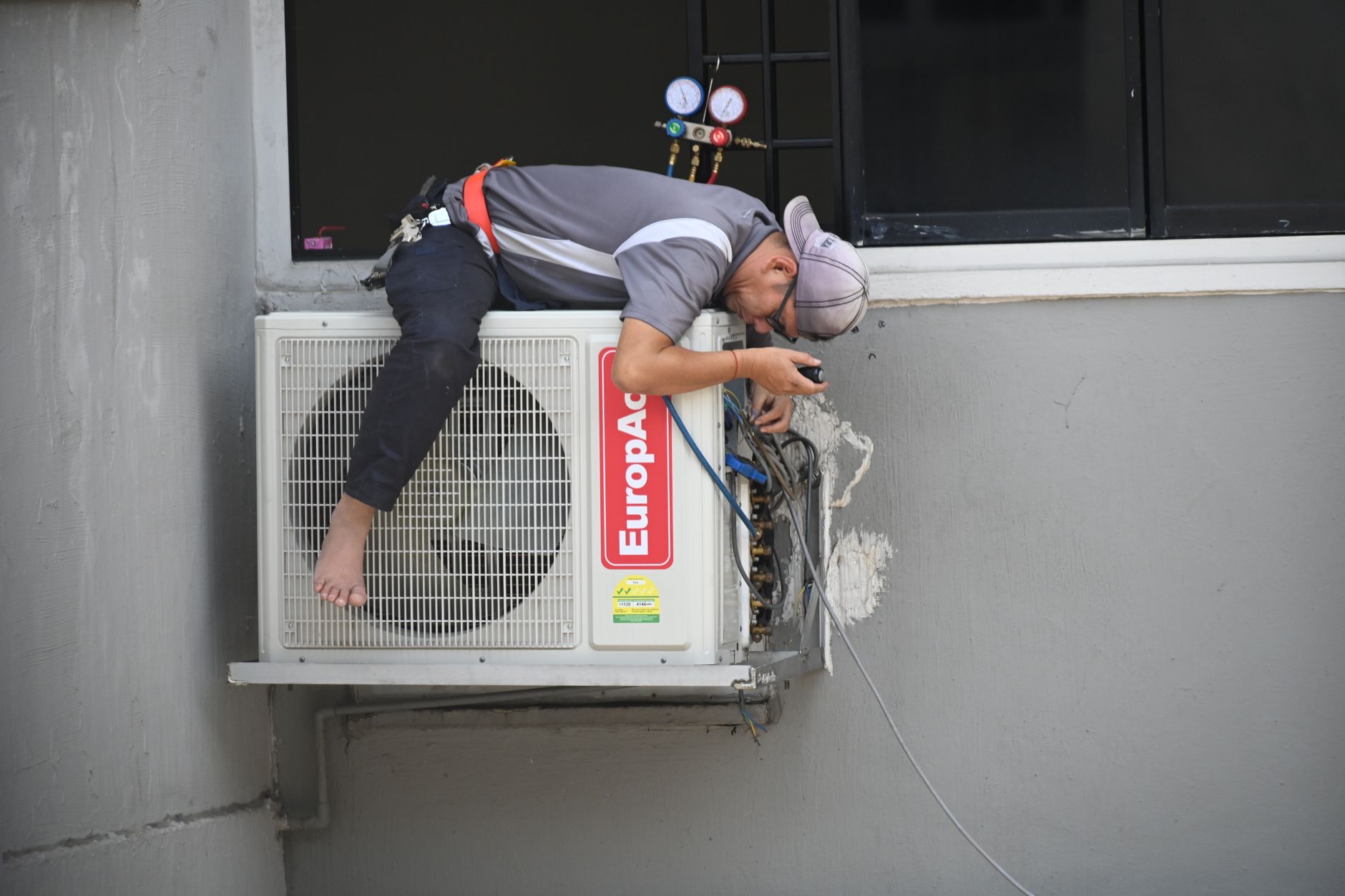
It’s the third week of June and the owner of an HVAC shop in Astoria is staring at a problem most contractors would kill to have: too much work. Three new install jobs landed in the same week — two rooftop condensers for a commercial building in Long Island City and a full system swap for a six-unit walk-up. Together they’re worth about $78,000 in billings. The catch is the supply house wants $31,000 up front for the equipment, and his two best techs just told him they’ll jump to a competitor if he can’t put them on overtime through August.
He’s done about $34,000 a month for the last year. Profitable. Clean. But every dollar of that is already moving — payroll on Friday, a truck payment, the parts he fronted on last week’s jobs that don’t pay out for another 30 days. He doesn’t have $31,000 sitting in the account, and his bank told him the line increase would take “four to six weeks to review.” The summer rush doesn’t wait four to six weeks. That’s the exact spot where a fast advance earns its cost — and where it can also bury a shop that doesn’t run the math first. Let’s run it.
Why summer is the worst time to be short on cash in HVAC
HVAC is one of the most violently seasonal trades there is. From late June through August, a shop can do half its annual revenue. Phones don’t stop. Every job is an emergency because somebody’s AC died in a heat wave and they’ll pay almost anything to get cool air back. Margins are good, work is plentiful, and the only thing standing between you and a record year is whether you can front the cost of doing the work before the customer pays you.
That’s the trap. The busier you get, the more cash you tie up in equipment, parts, and labor you’ve already laid out but haven’t collected on. A shop doing $34,000 a month in the spring might book $60,000 in July — but to deliver that it might have to spend $40,000 on units, refrigerant, and overtime weeks before the invoices clear. Growth eats cash. The faster you grow, the more it eats.
Banks are useless for this. They underwrite on tax returns and a slow committee, and by the time they say yes, it’s Labor Day and the rush is over. You need capital that moves on the same clock the season does.
What an HVAC advance actually funds
A merchant cash advance — also called a revenue-based advance, because the payback is tied to the revenue your business is already generating — gives you a lump sum now against your future deposits. For an HVAC shop heading into peak season, that money typically goes to four places:
Equipment and parts up front. The supply house wants payment before the condenser leaves the warehouse. A $50,000 advance covers two or three commercial installs worth of equipment so you can say yes to the jobs instead of passing them to a competitor.
Crew and overtime. Your techs are the bottleneck. Keeping them on overtime through August, or bringing on a seasonal helper, is the difference between finishing six jobs this month and finishing three. Payroll doesn’t wait for the customer to pay.
Fleet and tools. A second service van, a recovery machine, a new set of gauges — the stuff that lets you run two crews instead of one during the only eight weeks of the year it matters.
Bridging slow-paying commercial work. Residential customers usually pay on completion. Commercial and property-management jobs pay in 30, 60, sometimes 90 days. An advance bridges that gap so a $40,000 commercial install doesn’t strangle your cash for two months while you wait on their AP department.
The actual numbers: what $50K costs an HVAC shop
Here’s the part most brokers skate past. An advance is priced with a factor rate, not an interest rate. You multiply the amount by the factor rate to get your total payback. No compounding, no surprises — but the term changes everything about what it really costs you.
Say our Astoria shop takes $50,000 at a 1.30 factor rate. Total payback is $50,000 × 1.30 = $65,000. The fee is $15,000. What that fee actually costs depends on how long you stretch it:
| Amount | Factor Rate | Total Payback | Term | Daily payment (≈22 biz days/mo) | Approx. APR |
|---|---|---|---|---|---|
| $50,000 | 1.30 | $65,000 | 12 months | ~$246/day | ~50% |
| $50,000 | 1.30 | $65,000 | 9 months | ~$328/day | ~67% |
| $50,000 | 1.30 | $65,000 | 6 months | ~$492/day | ~104% |
| $50,000 | 1.30 | $65,000 | 4 months | ~$738/day | ~158% |
Same $15,000 fee in every row. But a 12-month term costs roughly a third of what the 4-month version costs in APR terms, because you’re spreading the same fee over three times as long. This is why “what’s the factor rate?” is only half the question. The other half is “what’s the term and what’s the daily payment?” Get both in writing before you sign anything.
For a seasonal HVAC shop, the term question matters even more, because your revenue is going to drop in the fall. A daily payment that’s comfortable in July at $60,000/month revenue can choke you in November at $25,000/month. Size the payment against your slow months, not your peak.
Does the math work for the Astoria shop?
Run it on the jobs in front of him. He fronts $31,000 in equipment plus a few thousand in overtime — call it $38,000 in cost to deliver $78,000 in billings. That’s $40,000 of gross margin on work that simply does not happen if he can’t buy the units. A $50,000 advance at 1.30 costs him $15,000 in fees. He clears roughly $25,000 he otherwise earns zero on, plus he keeps his two techs instead of training their replacements in August. That’s a deal that makes sense. The cost of capital is a line item, not the story.
If those same numbers were reversed — a $15,000 fee to chase $20,000 of low-margin maintenance contracts — the answer would be no. The advance only works when the work it unlocks is worth meaningfully more than the fee.
How an HVAC shop qualifies (and how fast)
The underwriting is built for speed because the whole point is funding work a bank won’t move fast enough to touch. A funder is looking at three things, in this order:
- Three to six months of business bank statements. Not tax returns, not a personal credit deep-dive. They want to see real revenue flowing through the account.
- Consistent deposits. Ten or more deposits a month tells them money comes in steadily — which matters because the payment comes out daily or weekly.
- How many advances you already have stacked. One existing position is usually fine. Three or four active advances is a red flag, and a sign you should be talking about consolidation, not new money.
The baseline most funders want to see, and the baseline we work with at BlueLine: $20,000+ a month in revenue and at least one year in business. Hit that, keep your statements clean, and a same-funder advance closes in 24 to 48 hours. We’ve turned deals around in under four hours for shops we’ve funded before.
If your business is doing that kind of revenue and you’ve got summer work you can’t front, you can get pre-qualified in about 60 seconds here with a soft credit pull that doesn’t move your FICO.
What slows a deal down
A few things turn a 24-hour approval into a week of back-and-forth, or a decline:
- Negative days and overdrafts. A few NSF days across three months happens to everyone. A statement full of them says the cash flow can’t support a daily payment.
- Already stacked deep. More than two or three active positions and most funders pass. The fix is consolidation, not a fifth advance.
- Under a year in business or under $20K/month. Newer or smaller shops can sometimes still get funded, but on tighter terms — and this is genuinely not the right product for a brand-new business with no revenue history. If you started the shop four months ago, an advance isn’t your answer yet.
That last point matters, so let me be blunt about it. An advance is for an existing business with real revenue and a defined use of funds. It is not startup capital, and it is not a way to fund an idea. If you’re pre-revenue, no advance at any price is going to help you — it’ll just hand you a daily payment your business can’t yet cover.
When to skip the advance entirely
Honest brokering means telling you when not to take the money:
You can’t name the job it’s funding. “I just want a cushion for the summer” is not a use of funds. If you can’t point to specific work the capital unlocks, the fee has nothing to pay for.
Your slow-season revenue can’t carry the payment. Size the daily against December, not July. If the math only works at peak, you’re setting up a winter cash crunch.
You’re already two-plus advances deep. Taking a third to cover the first two is how shops spiral. That call should go to someone who can consolidate, not to a fourth funder.
The job is low-margin. If the work the advance unlocks barely clears the fee, the juice isn’t worth the squeeze. Wait, save, and front it yourself.
The honest summary
For an HVAC shop, summer is the one stretch of the year where capital turns directly into profit — but only if it arrives on time. A bank’s four-to-six-week timeline misses the whole window. A revenue-based advance, sized right and used for specific income-producing work, closes in a day or two and lets you say yes to jobs that would otherwise walk out the door.
The cost is real — a 1.30 factor rate on $50K is $15,000, and you should know exactly what your daily payment is before you sign. But when that $15,000 unlocks $40,000 of margin and keeps your crew intact through your busiest weeks, it’s one of the clearest-cut uses of fast capital there is. Run the numbers on the actual jobs, size the payment against your slow months, and don’t borrow a dollar you can’t tie to work.
Get funded before the next heat wave
If your HVAC shop is doing $20,000+/month and you’ve got summer work you can’t front, BlueLine Capital Group can usually get you a real quote — factor rate, term, daily payment, total payback, all in writing — within the business day, and funding in 24 to 48 hours.
Get pre-qualified in 60 seconds →
Or call us directly: (212) 803-2032.
Frequently asked questions
How much can an HVAC shop actually get?
Most advances run roughly 80% to 150% of your average monthly revenue. A shop doing $34,000/month can typically access $30,000 to $50,000, sometimes more with strong, clean statements and time in business. The exact number comes down to your deposit consistency and how many positions you already have.
How fast can I get the money?
With three to six months of clean bank statements and no heavy stacking, 24 to 48 hours is normal. Repeat clients we’ve already underwritten can close same-day. The bottleneck is almost always how quickly you send the statements over.
Will the daily payment hurt me in the slow season?
It can if you size it wrong. Set the payment against your slowest months, not July. A good broker will structure the term so the daily is comfortable when revenue drops in the fall. If a funder is pushing a 4-month term with a daily that only works at peak, push back.
Do I need good personal credit?
It helps but it’s not the main signal. Funders underwrite primarily on your business bank statements and revenue, not a FICO score. A soft pull for pre-qualification doesn’t move your credit. Walk away from anyone who insists on a hard pull just to give you a quote.
Can I use it to buy equipment specifically?
Yes. Unlike an equipment loan tied to a specific asset, an advance is unrestricted — you can put it toward units, parts, overtime, a service van, or all four. That flexibility is part of what you’re paying for.
What if I already have an advance out?
One existing position is usually workable. If you’ve got two or three active, the smarter move is consolidation rather than stacking a new advance on top — we can talk you through what that looks like before you dig the hole deeper.
Is this the same thing as a merchant cash advance?
Yes. “Merchant cash advance” and “revenue-based advance” describe the same product for our purposes — a lump sum now, paid back as a fixed amount from your future deposits. Different name, same math.
Got specific summer jobs you’re trying to fund? Send us your last three months of bank statements and we’ll come back with a real quote within the business day. No obligation.
Apply in 60 seconds → or call (212) 803-2032.