Holiday Season Working Capital for NYC Restaurants: How to Fund Staff, Inventory, and Private Events Before November
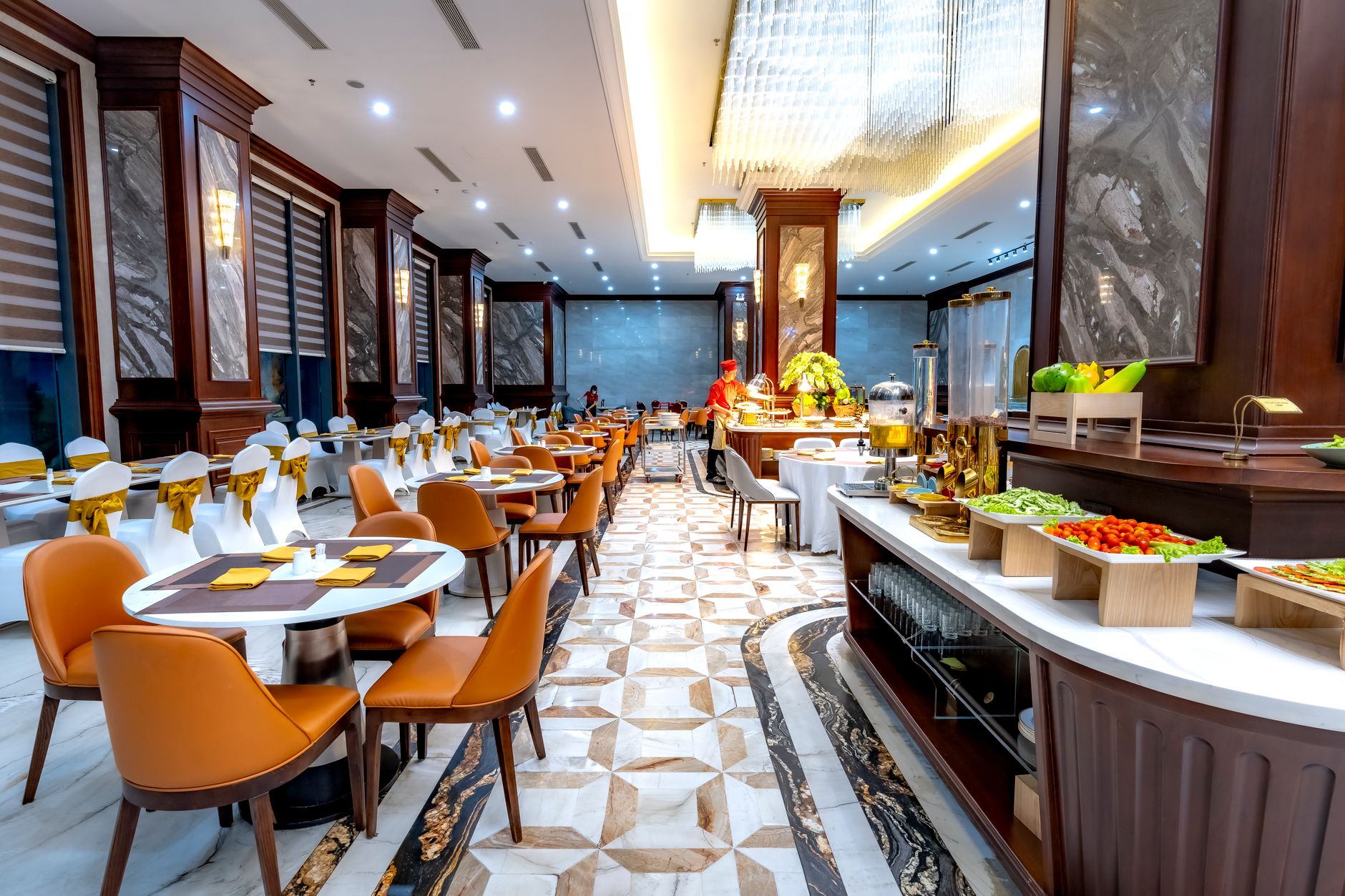
A Greek-Italian place on Ditmars Boulevard in Astoria called us last week. Nine years open, 110 seats, about $62,000 a month in deposits through the spring and summer. Last November and December the owner, Nick, did close to $95,000 a month, and he still turned away nine holiday-party inquiries because he didn’t have the staff or the kitchen capacity to take them.
This year he wants those parties. To get there he needs about $45,000 before November 1st: $16,000 to hire and train four servers and two line cooks three weeks ahead of the rush, $15,000 to lock in a wine, liquor, and protein pre-buy with his distributor at holiday pricing, $9,000 to replace a fryer and a reach-in that won’t survive double volume, and $5,000 of cushion. His bank told him the credit line review would take “six to eight weeks.” Six to eight weeks from late September is the middle of November. By then the party calendar is full, and it’s full at somebody else’s restaurant.
That’s the holiday funding problem: the money is needed before the revenue shows up. Here’s how to size it, what it costs, and where it goes wrong.
Why the money has to land in October, not December
Restaurants don’t get paid for the holidays in advance. The spending comes first:
| When | What you’re paying for | Typical cost (110-seat restaurant) |
|---|---|---|
| Late Sept – mid Oct | Hiring, training shifts, uniforms | $12,000 – $20,000 |
| Early – mid Oct | Distributor pre-buys (wine, spirits, proteins) | $10,000 – $25,000 |
| October | Equipment repairs or replacements | $5,000 – $30,000 |
| Late Oct | Holiday menu testing, printing, decor | $2,000 – $6,000 |
| Nov – Dec | The revenue actually arrives | — |
The party bookings for December get made in October. Corporate event planners in Midtown and Long Island City lock in venues six to eight weeks out. If you’re telling them “let me see if I can staff it,” they’ve already signed with the place down the street.
A bank line of credit is the cheapest option if you already have one and it’s big enough. Most independent restaurants either don’t, or have a $25,000 line that’s already half drawn. That’s where a working capital advance comes in.
What a holiday advance actually is
A merchant cash advance, which you’ll also hear called a revenue-based advance or revenue-based funding, is a purchase of a slice of your future card and bank receipts. You get a lump sum now. The funder collects a fixed daily or weekly amount from your business account until the agreed total is paid back.
For a restaurant, that structure fits. Deposits hit the account every day, underwriting is based on those deposits rather than tax returns or collateral, and funding usually happens in 24 to 72 hours. The trade-off is price, which we’ll get to.
How much a restaurant qualifies for (and why December doesn’t count yet)
Funders size the advance off your last three to six months of bank deposits, not off what you did last December. This catches a lot of owners off guard in the fall. You’re asking for holiday money, but the funder is looking at July and August, which for many Manhattan restaurants are the slowest months of the year.
Here’s a realistic range for a first position advance, assuming 1+ year in business, consistent daily deposits, and no existing advances:
| Average monthly deposits (last 4 months) | Typical first-position range | Typical factor rate |
|---|---|---|
| $30,000 | $15,000 – $30,000 | 1.30 – 1.42 |
| $50,000 | $25,000 – $50,000 | 1.27 – 1.38 |
| $62,000 | $35,000 – $60,000 | 1.25 – 1.35 |
| $90,000 | $50,000 – $90,000 | 1.22 – 1.32 |
| $150,000 | $80,000 – $150,000 | 1.18 – 1.28 |
A few things move you to the top or bottom of those ranges:
- Seasonality you can prove. If you can show last year’s November and December statements next to this summer’s, a good underwriter will factor in the lift. That can add 10–20% to an approval. Bring them.
- Your average daily balance. A restaurant that runs its account down to $300 by Thursday every week gets a smaller number than one that keeps $6,000 or more.
- NSFs and overdrafts. Two or three in four months is usually fine. Eight or ten will shrink your offer or kill it.
- Existing advances. If you already have one running, a holiday advance becomes a second position. That’s possible, but the number is smaller and the price is higher.
Nick’s $45,000 request sat comfortably inside his range. He had four clean months, one overdraft in July, and last year’s holiday statements to back up the story.
What $45,000 actually costs
Here’s his offer, in plain numbers:
| Term | Detail |
|---|---|
| Funded amount | $45,000 |
| Factor rate | 1.30 |
| Total payback | $58,500 |
| Cost of capital | $13,500 |
| Term | ~8 months (35 weeks) |
| Weekly payment option | ~$1,671 |
| Daily payment option (5 days/week) | ~$334 |
| Approximate APR | ~80% |
That’s not cheap money, and nobody should tell you it is. Now put it next to what he’s buying with it.
Last year he turned away nine parties. His average holiday party runs about $3,800. If the extra staff and kitchen capacity let him take even 12 parties this year, that’s roughly $45,600 in event revenue, before the extra walk-in covers on a fully staffed Friday in December. At a 30% food cost and the added labor, call the gross profit on that extra business $18,000 to $22,000 for two months. The advance costs $13,500 over eight months. That math works, with room to spare, if the parties actually book.
If they don’t book, the math doesn’t work. That’s the honest version, and it’s why you want deposits on the calendar before you sign, not a hope.
The January problem
This is the part most owners don’t think about until it’s already happening.
Your payment is fixed. Your revenue isn’t. Here’s what that same $1,671 weekly payment looks like as a share of Nick’s revenue across the season:
| Month | Monthly deposits | Monthly payment | Share of revenue |
|---|---|---|---|
| November | $95,000 | ~$7,240 | 7.6% |
| December | $98,000 | ~$7,240 | 7.4% |
| January | $48,000 | ~$7,240 | 15.1% |
| February | $51,000 | ~$7,240 | 14.2% |
In December the payment barely registers. In January, when the parties are gone and half of Astoria is on a diet, the same payment doubles as a share of revenue. That’s where restaurants get into trouble. Not in the holiday rush. In the six weeks after it.
Three ways to plan around it:
- Set aside a January reserve in December. If December comes in at $98,000, move $8,000 to $10,000 into a separate account before New Year’s. That covers most of the gap.
- Ask about early payoff. Some agreements include a prepayment discount. If yours does, paying a chunk down with December cash can cut your total cost. Get the discount terms in writing before you sign.
- Pick a shorter or smaller advance. A $35,000 advance over six months costs less in total and may be fully paid down by early spring. Borrow for the holiday need, not the most they’ll approve.
When a holiday advance doesn’t make sense
We turn down or talk people out of these deals regularly. The patterns:
You’re covering last holiday season. If you’re still behind on sales tax or vendor bills from last December, a new advance isn’t holiday capital. It’s a patch on a hole, and it usually makes the hole deeper.
You’re already carrying two or more advances. A third position in October, with January coming, is how a good restaurant ends up in a consolidation conversation in March. If you’re there, call about consolidation first.
The plan is “we’ll be busy.” Every restaurant thinks December will be busy. Funding makes sense against booked party deposits, a signed catering contract, or two years of statements showing the lift. It doesn’t make sense against optimism.
You’re opening a new place. If you’re opening your first location this fall, you’re not who this product is built for. Funders need at least a year of deposit history, and BCG works with established businesses doing $20,000 or more a month. If you already run one successful location and you’re adding a second, that’s a different conversation, and one we have often.
A pre-season checklist for restaurant owners
If you’re thinking about holiday capital, here’s what to do in the next two weeks:
- Write down the exact use of funds. Staffing, inventory, equipment, marketing. Real numbers, not “about $50K.”
- Pull your last four months of business bank statements plus last year’s November and December.
- Count your booked party deposits and any inquiries you had to turn down last year. Underwriters like this, and so should you.
- Get your distributor’s pre-buy pricing in writing. If the holiday discount saves you $2,000, that’s real money against your cost of capital.
- Decide your January reserve now, before the money is in the account and every other expense starts looking urgent.
- Get a quote with all five numbers: funded amount, factor rate, term, payment amount and frequency, and early-payoff terms.
You can start a soft-pull application here and see a real number before you commit to anything.
The honest summary
A merchant cash advance won’t be the cheapest money you ever use, but for a restaurant doing $30,000+ a month it’s usually the only money that shows up in October instead of December. Use it for a defined, income-producing need, size it to the need rather than the approval, and plan for January before you sign. Skip those steps, and the same advance becomes a problem in February.
Get your holiday number before the calendar fills
BlueLine Capital Group works with NYC, Long Island, Westchester, and North Jersey restaurants every fall. We’ll show you the factor rate, the term, the weekly or daily payment, and the early-payoff discount up front, and we’ll tell you straight if the math doesn’t work.
If your restaurant does $20,000+ a month and has been open a year or more, we can usually get you a soft-pull quote the same day and funding in 24 to 48 hours.
Get pre-qualified in 60 seconds →
Or call us directly: (212) 803-2032.
Frequently asked questions
How early should a restaurant apply for holiday funding?
Late September through mid-October. That gives you time to hire and train staff, place distributor orders, and fix equipment before November. Funding itself takes 24 to 72 hours, but the things you’re funding take weeks.
Will a slow summer hurt my approval?
It can lower the number, since funders average your last three to six months. Bring last year’s November and December statements to show the seasonal lift. Many underwriters will factor it in.
Can I get a holiday advance if I already have one running?
Sometimes, as a second position, but the amount will be smaller and the factor rate higher. If your first advance is more than halfway paid down, a renewal is often a better route than stacking a second one.
Should I choose daily or weekly payments?
Weekly is easier to plan around for most restaurants, especially when January slows down. Daily payments are smaller individually but hit every business day, including your slow Tuesdays. Ask for both options and compare.
Can I pay the advance off early with December revenue?
If your agreement includes a prepayment discount, yes, and it can save real money. If it doesn’t, paying early won’t reduce your total cost. Confirm the terms in writing before signing.
Does applying affect my credit?
Not with a soft pull. BlueLine’s pre-qualification uses a soft pull only. A hard pull may happen at final approval with some funders, and you’ll be told before that happens.
Have a specific holiday number in mind? Send us your last four months of bank statements and your use of funds, and we’ll come back with a real quote within the business day. No obligation.
Or call (212) 803-2032.