Equipment Financing vs. a Working Capital Advance: The Right Way to Fund a $60K Purchase
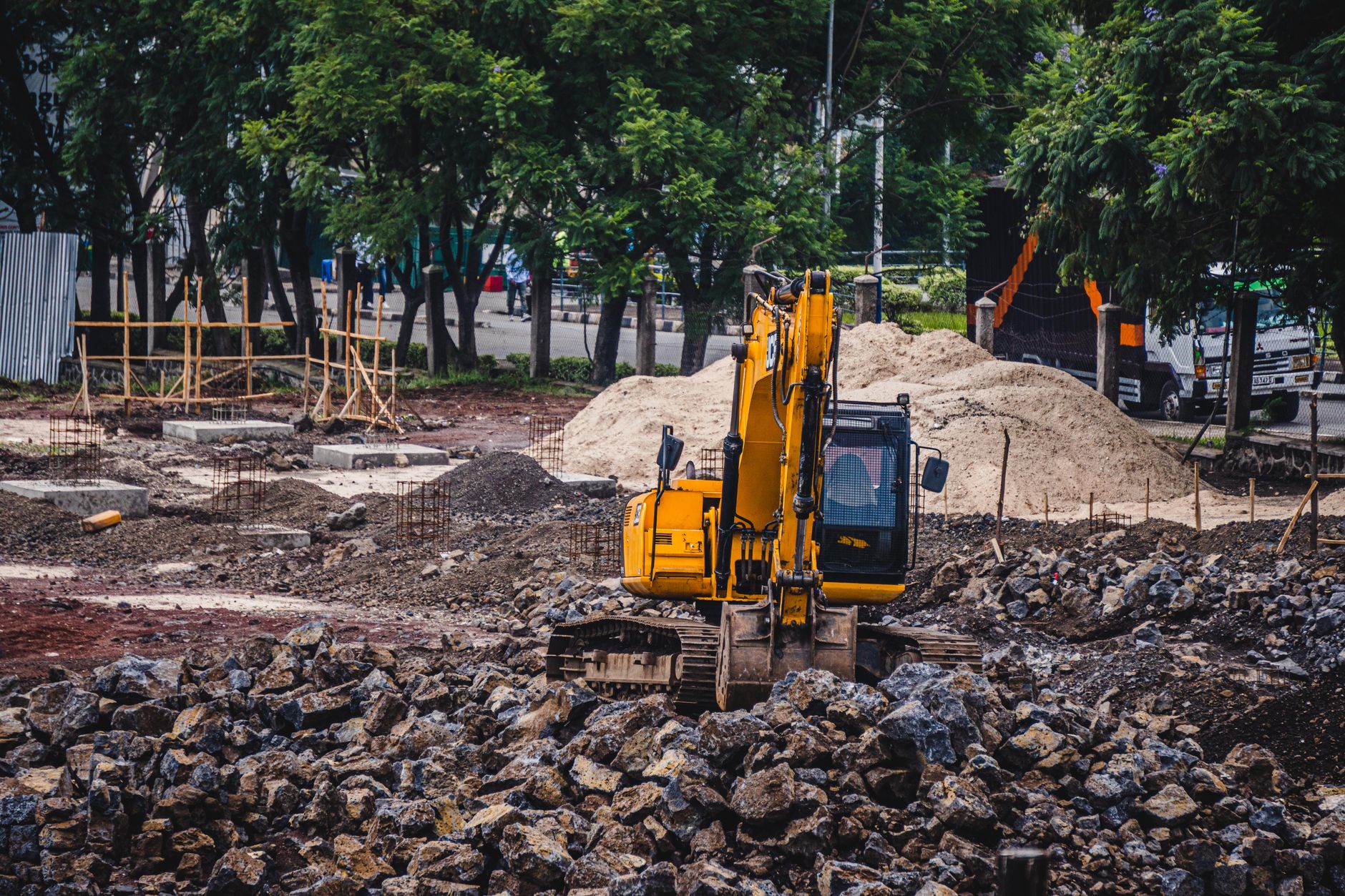
Marco runs a site-work contracting company out of Paterson, North Jersey — grading, trenching, small demo. Eleven guys on payroll, about $95,000 a month in revenue, booked solid through November. In August, the rental house pulled the mini excavator he uses on almost every job, and the math finally caught up with him: he’d been paying $4,200 a month to rent a machine he could own outright for $58,000.
He called us with one question: “Do I do equipment financing, or take an advance and just buy the thing?”
It’s the right question, and most owners only ever get half an answer — usually from whichever salesperson happens to sell the product they’re describing. Both options put the machine on his job sites. They differ in cost, speed, paperwork, and what happens when something goes sideways. Here’s the full comparison, with real numbers.
The two products, one minute each
Equipment financing is a loan (or lease) tied to the machine itself. The equipment is the collateral. The lender typically pays the vendor directly, you make a fixed monthly payment for three to seven years, and you own the machine at the end — or exercise a buyout if it’s structured as a lease. Rates generally run 8–20% APR depending on your credit, time in business, and the age of the equipment.
A working capital advance — a merchant cash advance, or what’s increasingly called a revenue-based advance; same product family — is capital against your future revenue, not against the machine. Underwriting is your last three to six months of business bank statements. The funder cares about your deposits, not the excavator’s serial number. Money lands in your account in 24–48 hours, you remit daily or weekly over roughly 4–18 months, and the cost is quoted as a factor rate — typically 1.18 to 1.49.
One product is secured by steel. The other is secured by your sales. Almost every other difference flows downstream from that.
Side by side: funding a $60K purchase
| Equipment financing | Working capital advance | |
|---|---|---|
| Speed to funds | 5–15 business days | 24–48 hours |
| Typical cost | 8–20% APR | 1.18–1.40 factor rate |
| Term | 36–84 months | 4–18 months |
| Collateral | Lien on the machine | No title lien; UCC filing on the business |
| Credit requirement | Hard pull, usually 620+ FICO | Soft pull to quote; deposits matter more than FICO |
| Down payment | 0–20% | None |
| Covers delivery, install, extras? | Sometimes, and capped | Yes — it’s cash |
| Used or private-party equipment | Often declined past 7–10 years old | Doesn’t matter |
| Payment rhythm | Fixed monthly | Daily or weekly |
Neither column wins outright. The right answer depends on which constraints are real for you this month.
When equipment financing is the right call
Let’s be straight about this first, because plenty of brokers won’t be: if you qualify and you have time, equipment financing is usually the cheaper money. Take it when these three things line up.
The machine will outlive the loan
A mini excavator has a 10+ year working life. Putting it on a 60-month note means the asset keeps earning long after the debt is gone. Matching the life of the asset to the length of the debt is the oldest rule in commercial lending, and it’s still right.
You have two-plus weeks
Equipment lenders want a vendor quote or invoice, insurance certificates, sometimes an inspection or appraisal on used gear, and a hard credit pull with real underwriting behind it. Five to fifteen business days is normal for a first-time relationship. If your job starts after that window, the timeline costs you nothing.
Your file is clean
650+ FICO, two-plus years in business, tax returns that show a profit, no recent liens or slow-pays. That file prices at 9–12% APR right now. On $58,000 over 60 months at 10%, that’s about $1,232 a month and roughly $15,900 in total interest. Good money. Take it and don’t look back.
When the advance wins
The job starts Monday
A rental gets pulled. A compressor dies in an HVAC shop in Ridgewood, Queens, in the middle of a heat wave. A contract lands and mobilization is in five days. Speed is exactly what a merchant cash advance is priced for: statements in on Tuesday, offer Wednesday, wire Thursday. No equipment lender moves like that for a new client.
The equipment is used, old, or a private sale
Marco’s excavator was a 2016 machine being sold by a retiring contractor in Bergen County. Private party, no dealer, no invoice on letterhead. Half the equipment lenders out there decline anything past seven to ten model years; the rest haircut the amount and slow down. Cash closes. And cash buyers negotiate — Marco got the seller from $58,000 down to $54,500 for a same-week wire.
The purchase is more than the machine
A “$60K equipment need” is often a $48K machine plus a trailer, freight, an attachment, insurance, and the first month of fuel and operator time. An equipment loan funds the machine. An advance funds the whole project, because it’s simply working capital in your account.
Revenue is strong but your credit took a hit
A divorce in 2023, a medical mess, an old tax lien — a 590 FICO with $95,000 a month in clean deposits gets declined at the equipment desk and approved on revenue-based underwriting the same day. That mismatch between what the credit bureau says and what the bank statements say is the exact gap this product exists to fill. If that’s your situation, you can get pre-qualified in 60 seconds with a soft pull that doesn’t touch your score.
What Marco’s excavator cost each way
| Equipment loan | Advance | |
|---|---|---|
| Machine price | $58,000 (financed price) | $54,500 (cash discount) |
| Cost of the money | ~$15,900 interest over 60 mo. | $16,500 fee (=$55,000 × 1.30) |
| Total out the door | ~$73,900 | $71,000 + $500 kept cash |
| Payment | $1,232/month | ~$1,375/week for 12 months |
| Time to close | ~2 weeks, if approved | 48 hours |
Look at the payment line honestly. $1,375 a week is a very different animal than $1,232 a month — the advance compresses the whole cost into one year of heavier remittances, then it’s over. That only works because the machine replaced a $4,200 monthly rental and immediately started billing on jobs. The payment had a revenue source the day the wire landed.
Marco took the advance. He kept three weeks of booked work he’d otherwise have subbed out or delayed, and the excavator was billing on a Newark utility job the following Tuesday. And here’s the part we tell every caller: if he’d had a month of lead time and a 680 FICO, we’d have told him to go get the equipment loan. Same machine, cheaper money. The advance won on the calendar, not on price.
Sizing up a purchase like this right now? Send us your last three months of bank statements and the quote on the equipment — we’ll show you the real cost both ways before you sign anything. Apply at bluelinecapitalgrp.com/get-funded or call (212) 803-2032.
The mistakes that turn a good purchase into bad debt
- Funding a 10-year asset on 6-month money, over and over. One short advance for a machine that immediately produces revenue is fine. Renewing that advance three times because the payment never fit your cash flow means you paid three fees for one excavator. If you already know you’ll need multiple renewals, price the equipment loan first — even if it takes two weeks you don’t think you have.
- Not reading the lien language. Some equipment lenders file a blanket UCC on the whole business, not just the machine. Some advance agreements include personal guarantees. Neither is automatically a dealbreaker — but know which one you’re signing before you sign it.
- “0% vendor financing” with a balloon. Dealer promos can be great, and some hide a big final payment, doc fees, or a rate that jumps after month six. Ask for the total of all payments, in writing, and compare that number — not the teaser rate.
- Buying the machine and starving the business. If the purchase drains the account to zero, the machine can’t save you from missing payroll in week two. Fund the machine and the cushion, or buy a cheaper machine.
- Taking the biggest approval instead of the right amount. Getting approved for $85,000 doesn’t mean the $60,000 purchase became an $85,000 problem. Borrow the project, not the limit.
One more piece of honesty about who this is for. If your business is under a year old, doing less than $20,000 a month in deposits, or you’re buying your first machine for a company that hasn’t launched yet — an advance is the wrong tool, and we’d be doing you no favors pretending otherwise. Advances remit from revenue; no revenue, no math. For a startup equipment purchase, a down payment plus an SBA microloan or dealer program is the honest route, and we’ll tell you that on the phone for free.
How to decide in five minutes
- When does the money need to land? More than two weeks out: price equipment financing first. Less than a week: it’s the advance or the sideline.
- New machine from a dealer, clean credit? The equipment loan is almost certainly cheaper. Take it.
- Used, private-party, or a mixed purchase (machine + extras)? The advance covers what the equipment desk won’t.
- Can you clear the balance inside 12–18 months — because the machine bills immediately, or a payoff event is coming? Then the advance math works. If payback honestly needs five years, so does the debt.
- Still a coin flip? Get both quotes in writing and compare total dollars out the door, not rates. A 10% APR and a 1.30 factor rate can’t be compared in your head — but $73,900 versus $71,000 can.
We broker working capital for existing businesses doing $20,000+ a month — restaurants, contractors, HVAC and auto shops, trucking, retail, medical practices — across the five boroughs, Long Island, Westchester, and North Jersey. When the equipment loan is the better deal for you, we’ll say so. When speed matters more than rate, we’ll have a real offer in front of you in hours, with the factor rate, term, payment, and total payback in plain numbers.
Frequently asked questions
Can I use a working capital advance to buy equipment?
Yes. The advance is unrestricted cash in your business account — you can put it toward a machine, delivery, installation, an attachment, or the crew to run it. The funder underwrites your revenue, not the purchase.
Which is cheaper, equipment financing or an advance?
Equipment financing, almost always — if you qualify and can wait for it. A clean file pays 8–14% APR over five years. The advance costs more per dollar but closes in days, requires no down payment, and approves on bank deposits instead of FICO. You’re paying for speed and access, and you should only pay for those when they’re actually worth money to you.
Do I need a down payment for an advance?
No. Equipment loans often want 10–20% down, especially on used gear or newer businesses. An advance funds the full amount with nothing out of pocket, which matters when your cash is tied up in receivables.
Will the funder put a lien on the machine I buy?
Not a title lien — you own the machine outright from day one. Most advance agreements do include a UCC-1 filing on the business itself, which is standard. Read the agreement so you know exactly what’s filed.
What credit score do I need?
Equipment lenders typically want 620–650+ with a hard pull. A revenue-based advance is quoted with a soft pull, and approvals lean on your deposits: $20,000+ a month in revenue and a year in business gets a real offer even with a FICO in the 500s.
How fast can I actually get the money?
With clean statements and no stack of existing positions, 24–48 hours from application to wire is normal. Repeat clients close faster.
What if I already have an advance on the books?
One existing position with strong deposits is usually workable for a second. Three or more, and adding another for an equipment buy is how businesses get buried — ask about consolidation before you ask about more money.
Have the equipment quote in hand? Get the other half of the math today — pre-qualification takes 60 seconds and won’t touch your credit.
Apply now → or call (212) 803-2032.